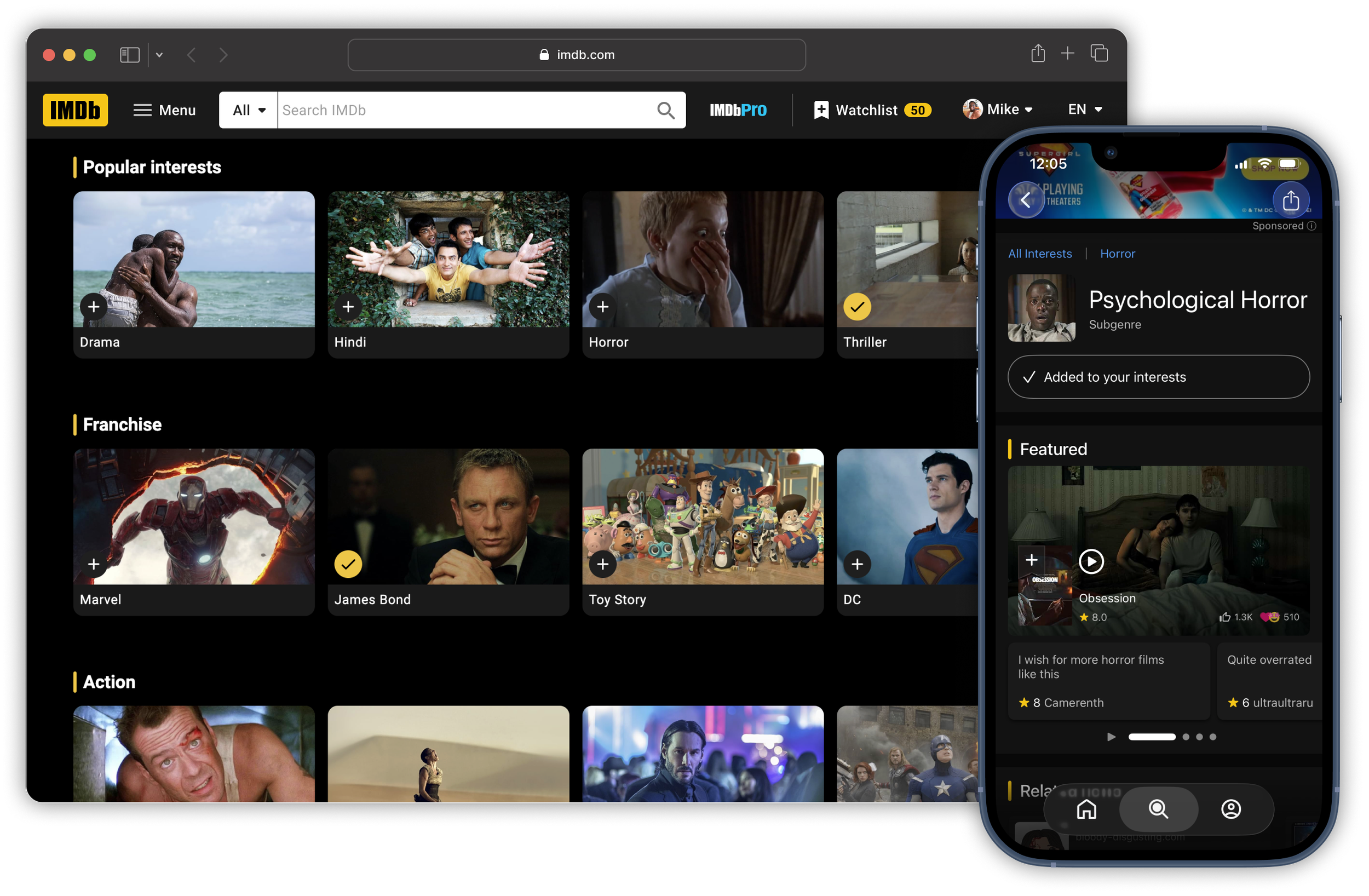
IMDb Interests
“I felt much more bonded with the other fans through this interaction because it made me realize I'm not alone in feeling the way I do and also, I'm not crazy for being so passionate about this show.”
— Mary M.
Summary
Role
Creator, UX lead, ecosystem designer
Timeline
2023–present (ongoing)
Team
10+ teams, 40+ collaborators across UX, PM, Engineering, Research, Marketing, Editorial
Platforms
iOS, Android, Web
2MM
4.9MM
interests live
title page visits driven
7.6MM
+275%
monthly visits
follow users
55MM
310+
visit growth
watchlist adds driven
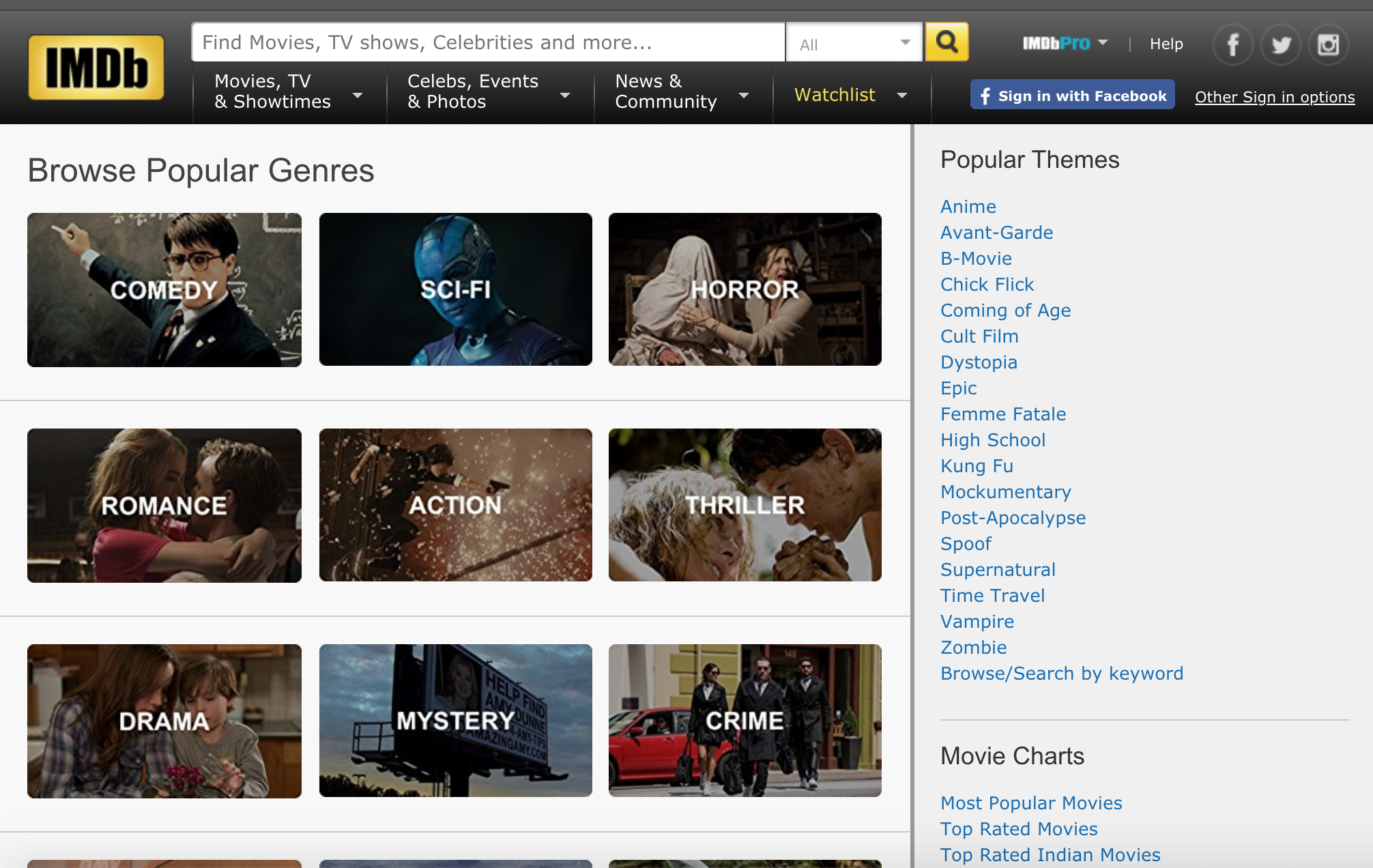
The previous genres page, circa 2018.
The Opportunity
Over the course of multiple projects, I observed a pattern. A common thread running through customer pain points across different contexts:
During What to Watch, we were building games to help customers articulate what they were in the mood for. But IMDb's content taxonomy was too blunt. We only had broad genres like Drama, Comedy, Horror. Customers needed to say "I want a Psychological Thriller" or "something with zombies," and we couldn't get them there.
In the mobile apps diary study, the top two things customers said were missing from IMDb were personalization and community. They wanted the app to know them better, and they wanted to connect with others.
In our Gen Z research, we learned that community is in every part of how young fans interact with entertainment. They bond around shared passions, define themselves through niche interests, and seek belonging with like-minded people. IMDb had none of that. They went to Reddit and Discord instead.
Three signals, one gap. IMDb had no comprehensive classification system, no way for customers to express their taste, and no connective tissue between fans who love the same things.
The Vision
I proposed Interests as more than a browse feature. It was a bet on three things:
Discovery
"Interests related to this title," a classification system helping fans find more of what they loveIdentity
"My interests," a personal expression of taste on your profile, personalizing everythingCommunity
"Our shared interests," the connective tissue between fans, building trust between strangersThe initial stakeholder instinct was to build upon the existing "genres" framework. I fought for "interests" because I could see the system expanding beyond subgenres into franchises, languages, moods, eras, and categories we hadn't imagined yet.
A rigid classification would box us in. A relationship could evolve to reflect the shifting entertainment landscape.

I presented this vision with working prototypes, provided verbiage and mocks for the 2023 Apps Strategy document, and pitched stakeholders on the long-term potential. My mobile apps product partner, Alex Lazaris, believed in the vision and saw how it tied directly into our goals. With his help, we took our strategy on a roadshow across the organization, aligning stakeholders and winning collaborators.
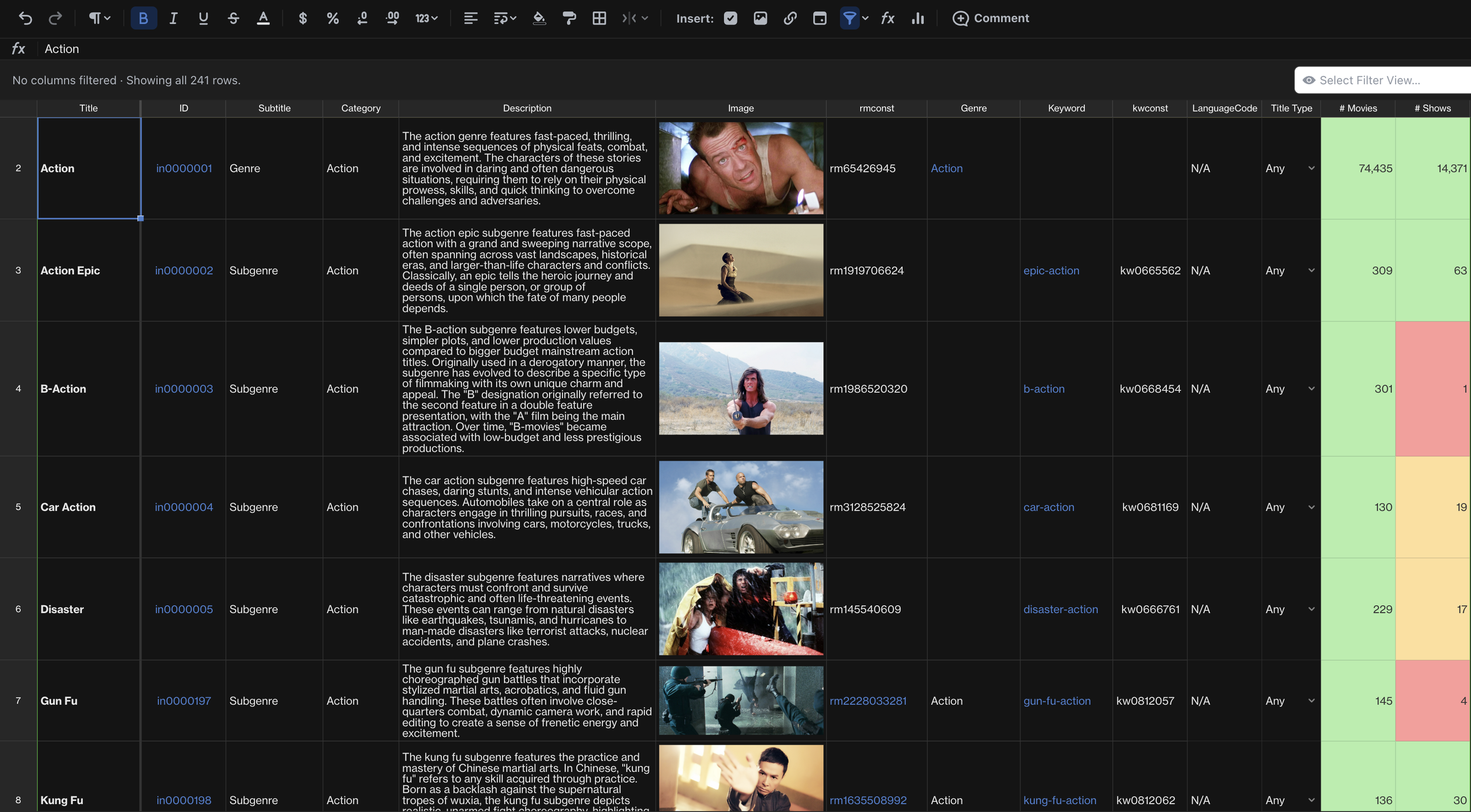
I wrote every definition, selected every hero images that met 17 image guidelines I established, led manual tag grooming across thousands of titles, manually audited every interest page, and coordinated implementation across 10+ teams.
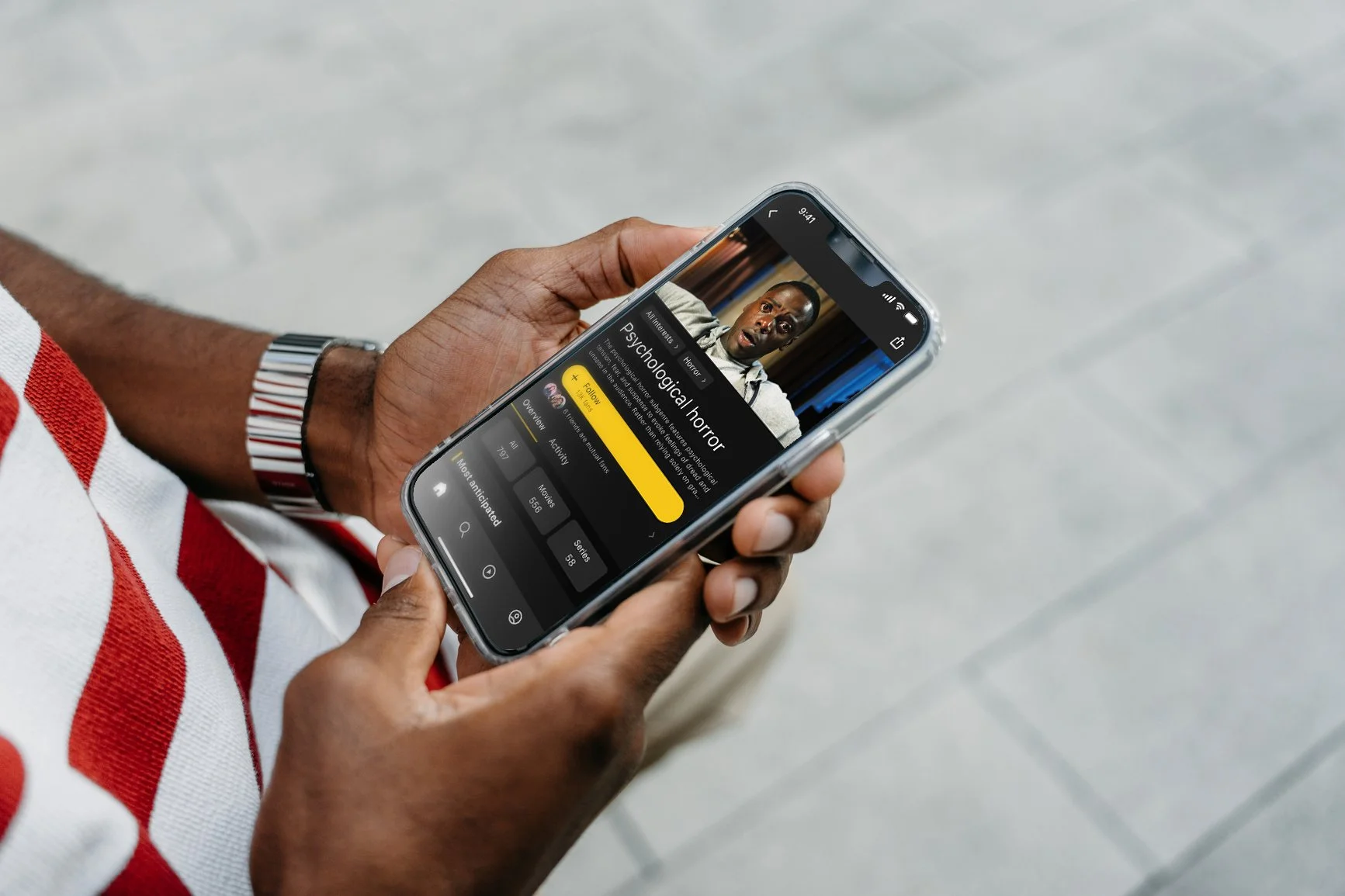
The Solution
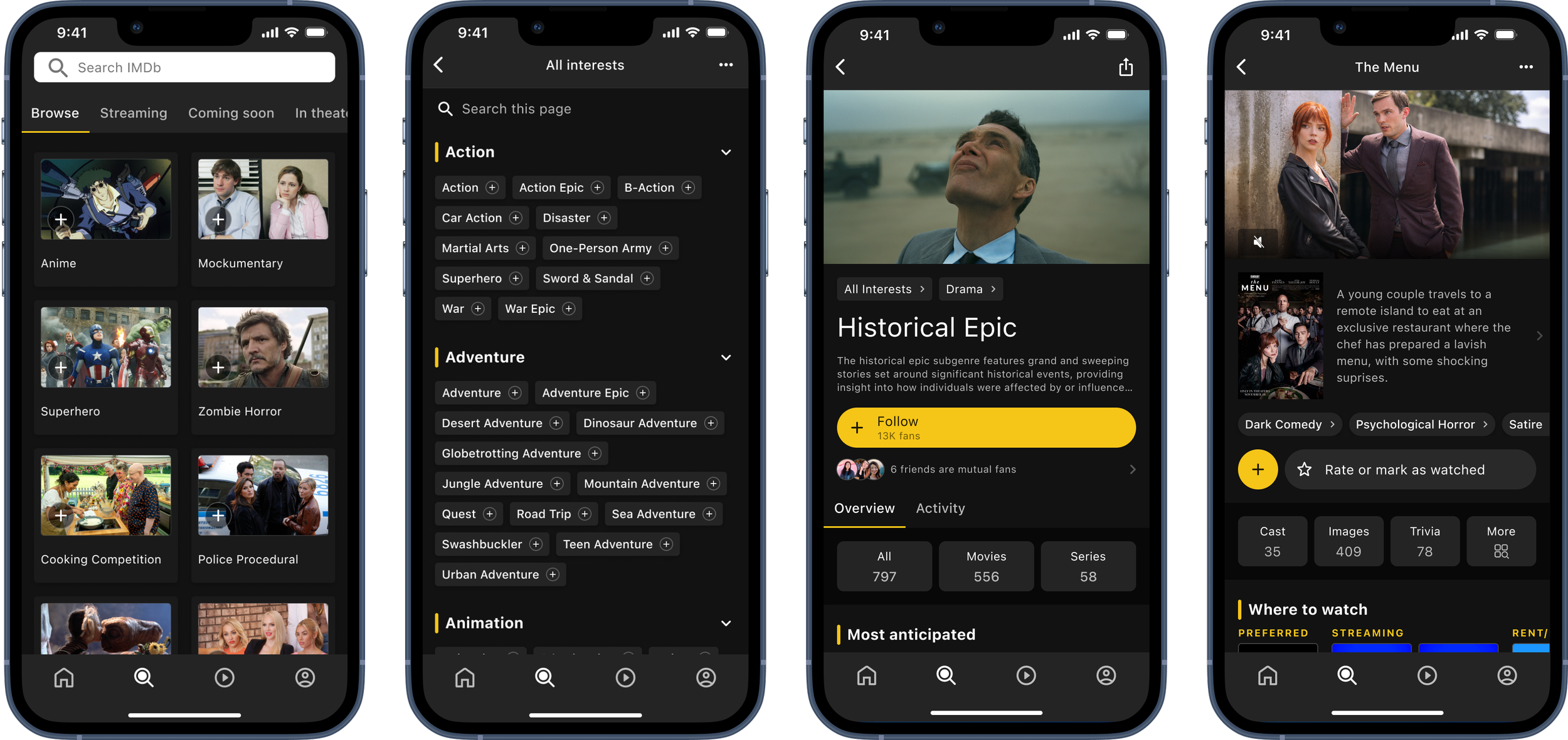
IMDb Mobile App: Browse, All Interests, Interest Page, Title Page
Interests wasn't one page. It was an ecosystem.
Interest Pages: dedicated hubs with popular/top-rated titles, trailers, news
Title Page Integration: interest tags linking to relevant pages
Search: all interests searchable
Profile: followed interests visible, powering personalization
Home: Popular Interests widget
Notifications: "A title matching your interest is now streaming"
Interest were identified as page heroes, cards, list items, and chips across all of these touch points, across every client.
Launch
November 2023: Mobile apps launch
Interests launched globally on the mobile apps. A new page type (Interest Page) and a new const (inconst) were introduced to IMDb for the first time. Interests launched on web July 2024.
January 2024: Two months post-launch
7.7MM cumulative page views across all Interest pages
2.6MM unique app customers visited at least one Interest page
390K customers (15% of visitors) visited 2+ different Interest pages
152K customers (5.8%) chose to add an interest
109K customers (4.2%) registered as a direct result of the Interests feature
100K cumulative follow users reached within 2 months of launch
Traction wasn't just page views. It was customers moving from curious to committed. One in seven visitors returned for more than one interest, and Interests became a measurable driver of new IMDb accounts.
Growth & Evolution
Expanding the taxonomy
May 2024: Added 16 new interests (8 anime, 4 action, 2 drama, 1 lifestyle, 1 form) and added search integration
Role: Designed search integration patternsJuly 2024: Worldwide web launch with SEO-optimized pages
3.4MM monthly interest page views on web (65% mobile web, 35% desktop)
Web interest pages drove 522K title page visits and 43.9K watchlist adds per month
Aug 2025: "Add to Interests" on web, follows synced across platforms
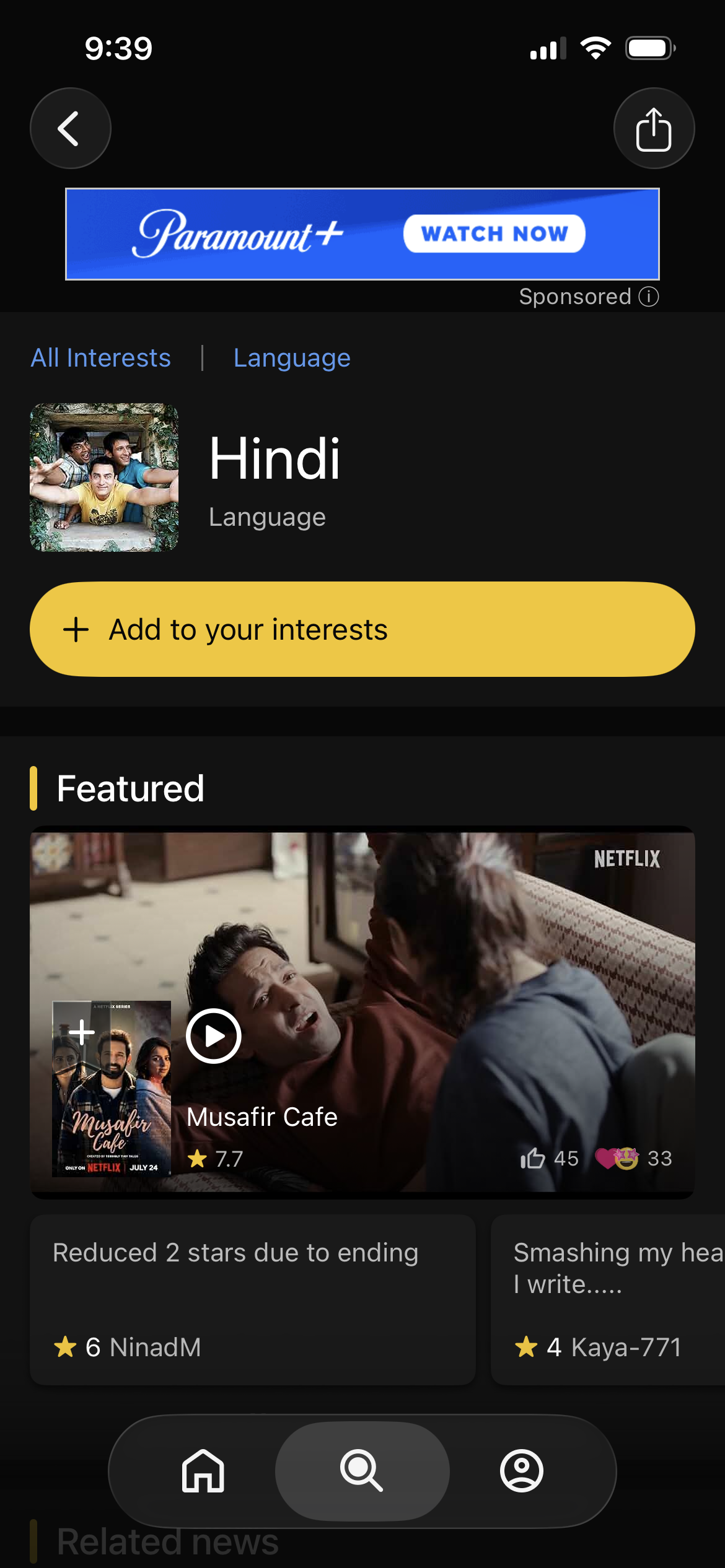
Role: Designed follow UX, related interests widgets, profile integrationOct 2025: Language Interests (30 languages), Hindi reached 6th most popular within 1 month
Role: Selected all 30 languages, wrote definitions, selected hero imagesMay 2026: Interest page updates: hero redesign, featured widget, news carousel. 68 franchise pages added (Star Wars, Marvel, DC, Harry Potter, etc.)
Role: Oversaw new designs, mentored Teddy on execution, owned apps implementation
Each platform and category expansion created a step-change. The expansion from apps to web nearly doubled visits overnight. New engagement features and franchises pushed the next inflection. Between expansions, growth compounds at ~3% month-over-month, a sign of organic product-market fit, not just launch spikes.
Follow growth
Nearly 2 million customers have actively followed at least one Interest — an explicit declaration of taste identity. This is the stickiest metric: customers voluntarily telling IMDb what they love.
What follow data reveals about the taxonomy working:
At launch, early adopters skewed heavily toward Action (50%), Adventure (42%), and Superhero (41%). As the user base broadened over 32 months, category share flattened and diversified: Action (19.2%), Thriller (18.8%), and Comedy (18.1%), with Thriller overtaking Action as the fastest-growing category by share, which is a signal that mainstream audiences are finding and using Interests to express nuanced taste, exactly as designed.
Engagement
Interest pages are #18 by traffic volume on IMDb — but they generate nearly 2x the engagement rate of Name pages (1.91% vs 0.99%), the #2 page type by volume. Despite being 2.5 years old on a 30-year-old platform, Interest pages outperform one of IMDb's most established surfaces on the metric that matters: customers actually doing something on the page.
-
![]()
Subgenre
-
![]()
Franchise
-
![]()
Language
-
![]()
Technique
-
![]()
Subgenre
-
![]()
Form
-
![]()
Genre
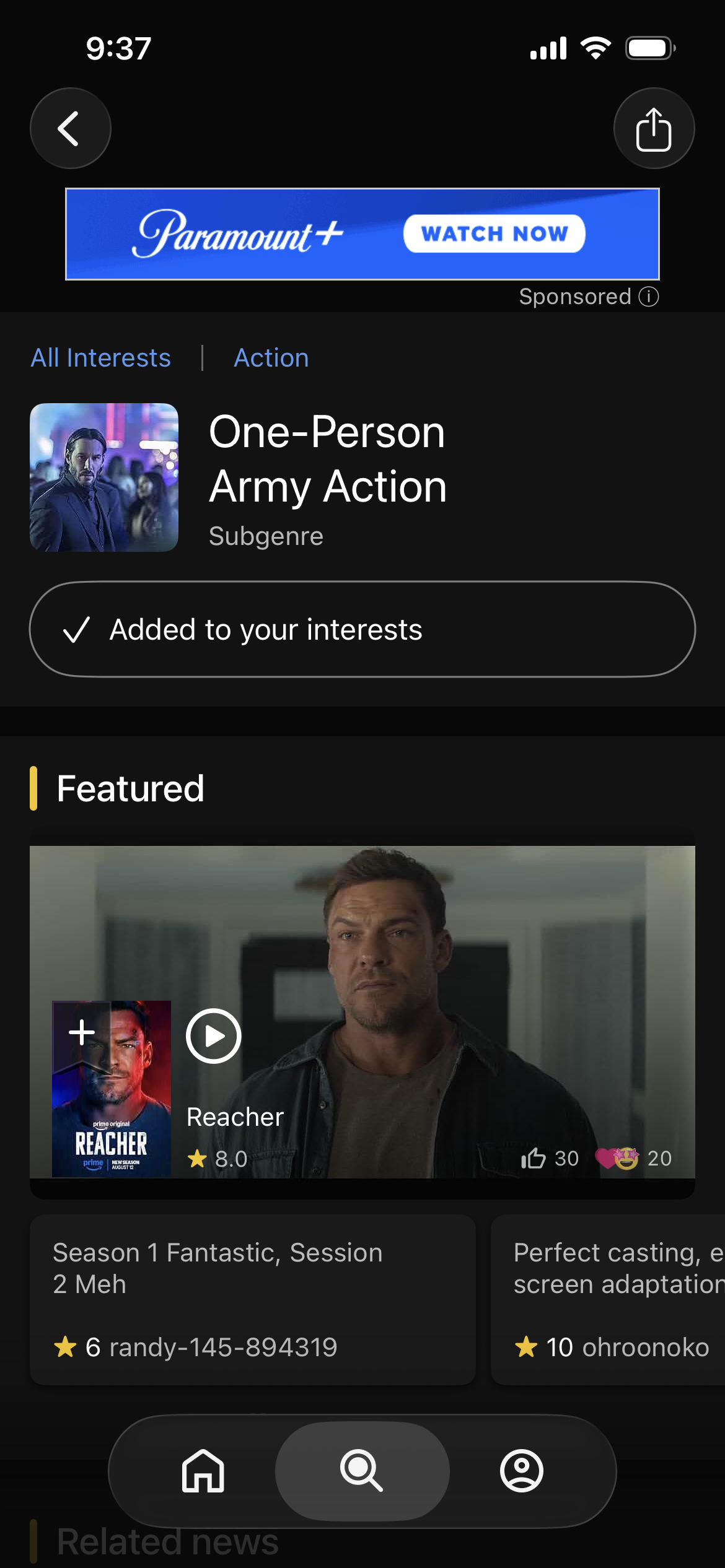
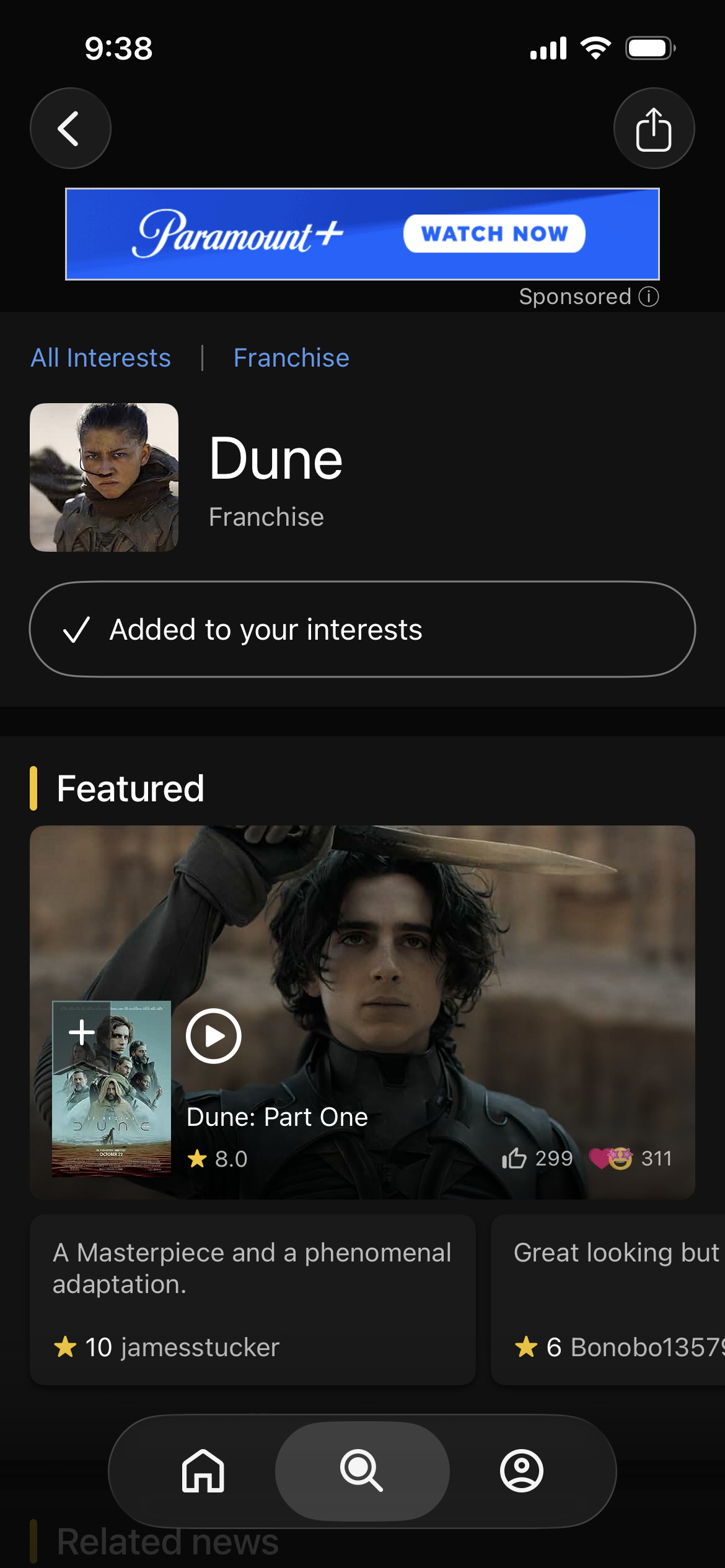
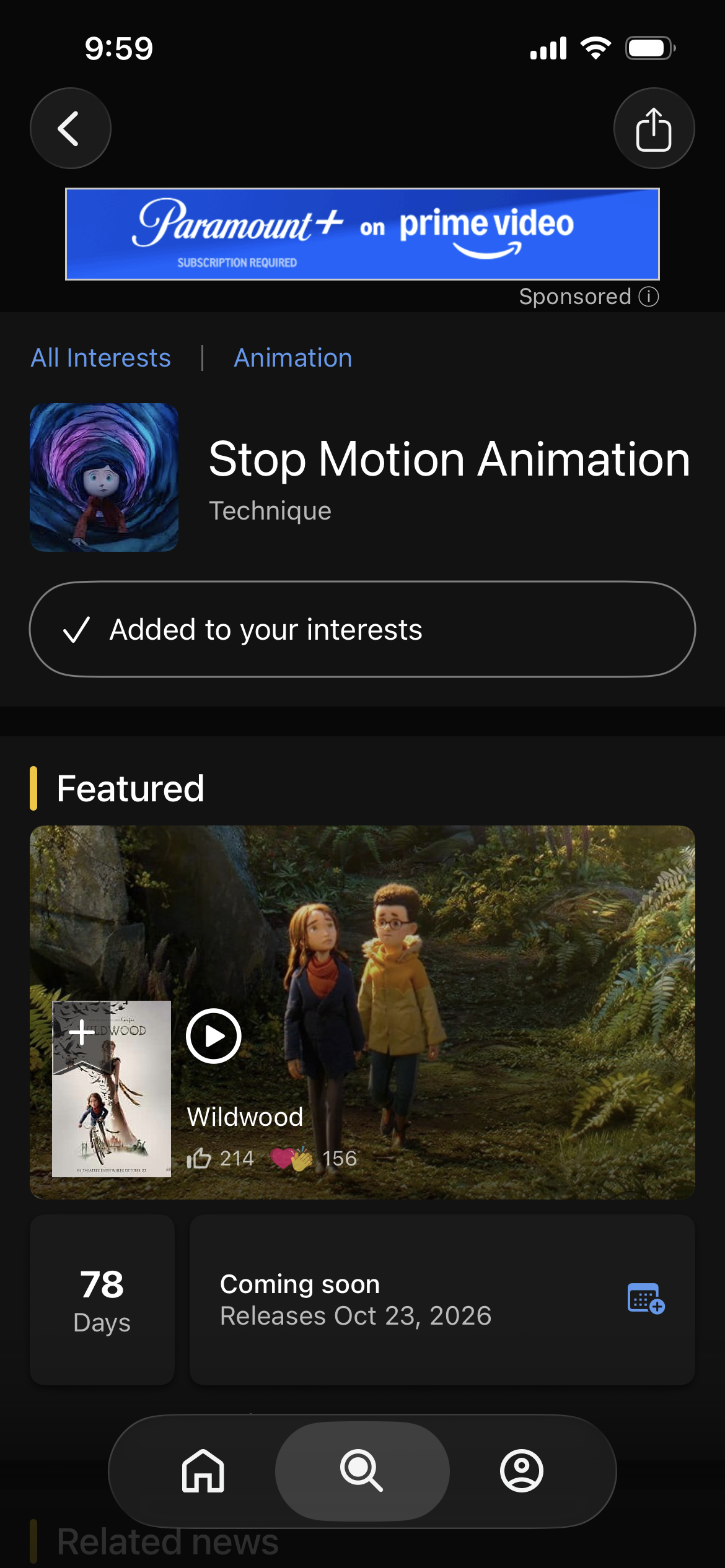
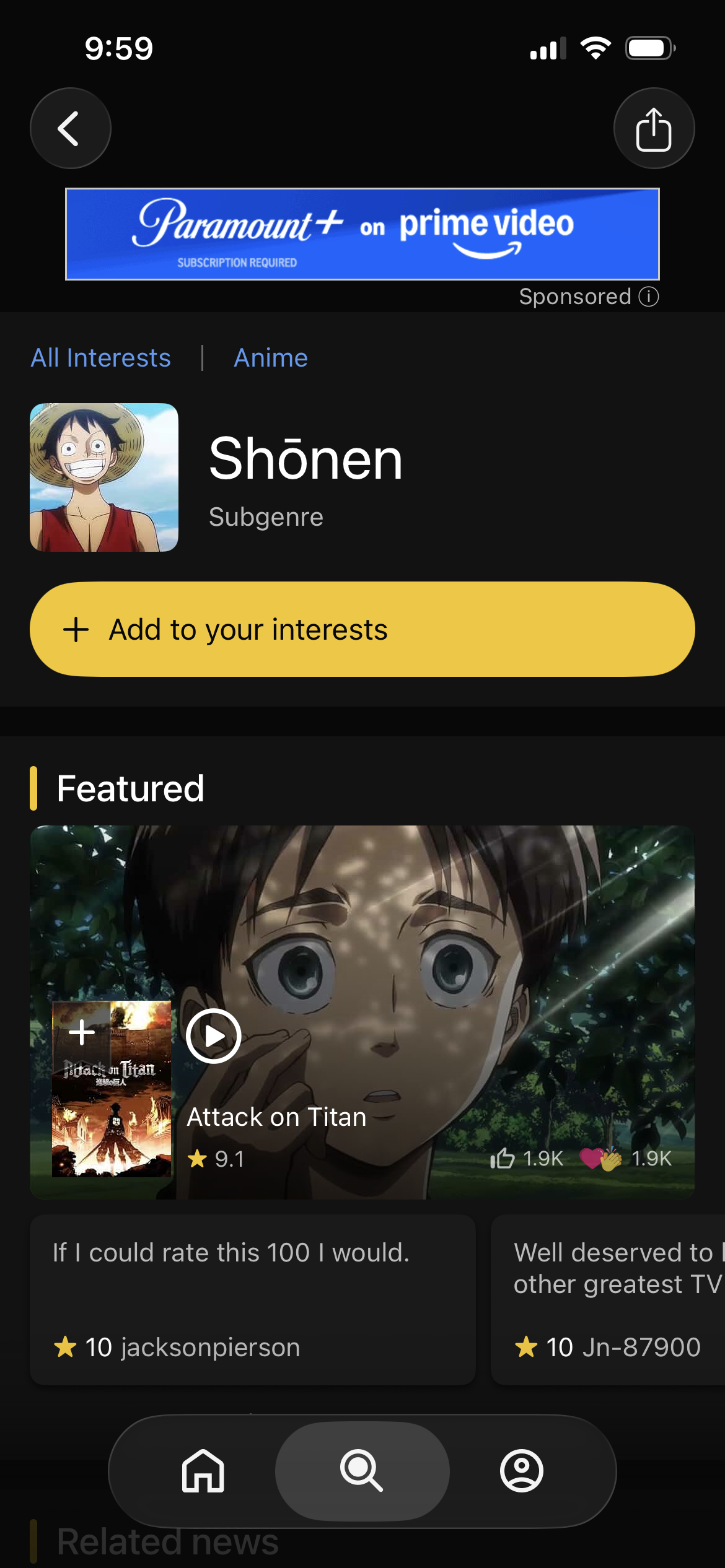
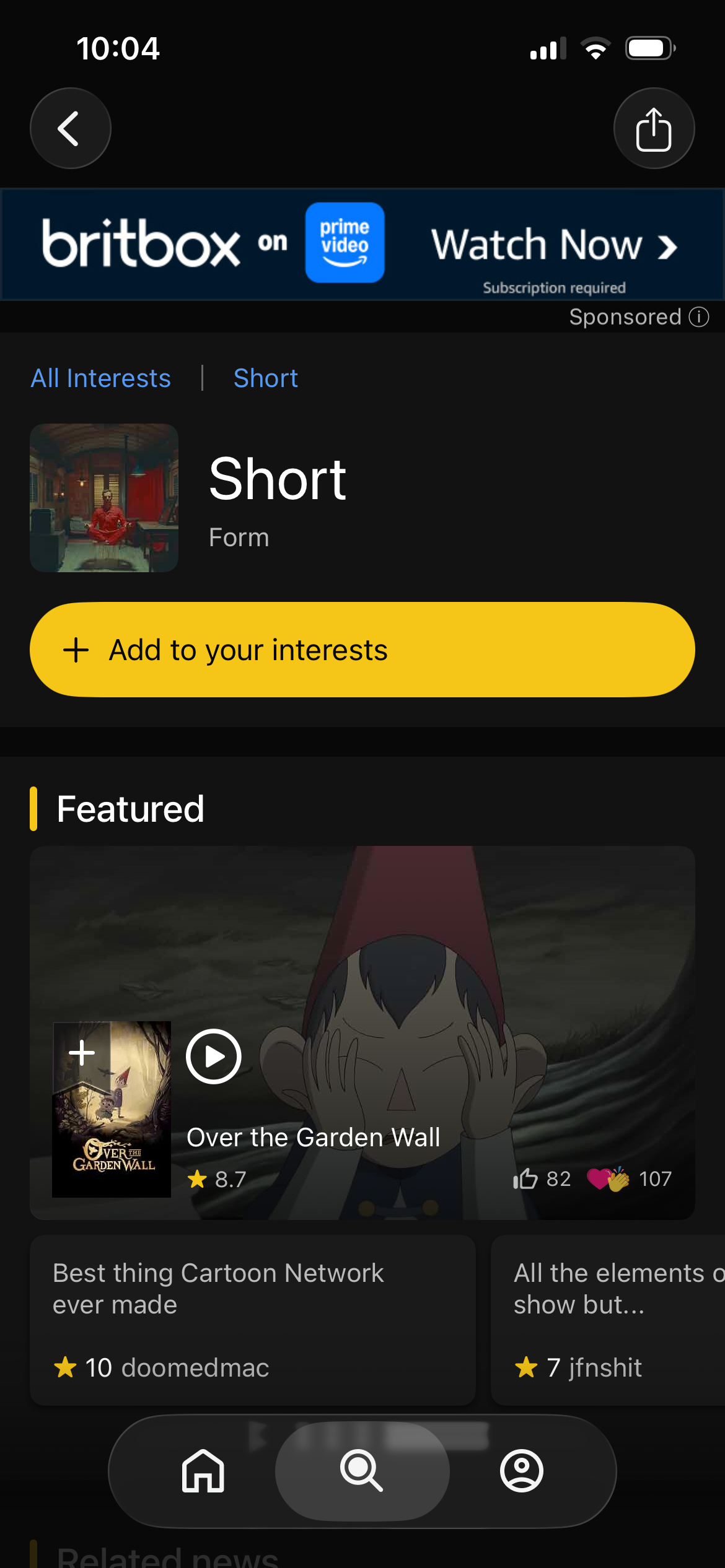
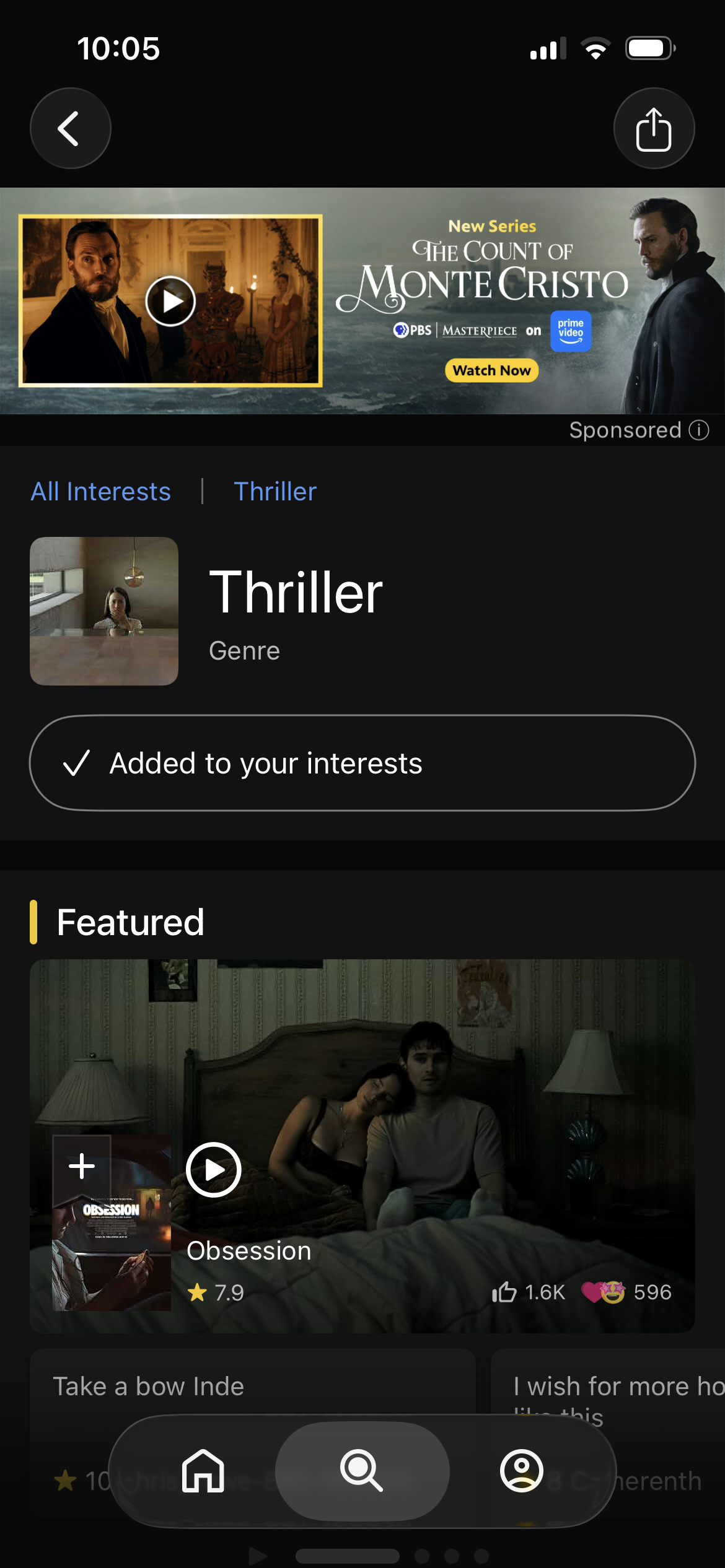
What It Unlocked
-
Personalization
Interests became the single strongest signal for the Taste Profile, accounting for 37% of "For You" score weighting for IMDb’s personalization engine.
-
Community
Each interest is now a hub for community. Where fans can discuss, debate, and connect. The taxonomy defines the communities.
-
Notifications
Followed interests power push notifications via Braze, a closed-loop system driving return visits from content customers explicitly care about.
Customer Voices
“I have learned about different interests that I did not know had names!”
"Instead of wasting time on Netflix looking for something to watch, I can just look in my interests and go find one of the titles from there."
"It personalizes my interaction with IMDb. No more random searching."
"I appreciate its unique classification that helps you figure out the type of movie that you connect with."
Reflection
Interests is the project I'm most proud of. I created it from nothing. Wrote the vision, designed the system, selected every initial interest, wrote every definition, and drove it across 10 teams.
The thing I got right: designing for extensibility from day one. The name held. The ontology scaled. Every new category slots in without reinventing the experience.
The deeper insight: helping people name what they love is a form of empowerment. The system didn't just help them find content. It helped them understand themselves.